
Getting a medical diagnosis can throw anyone through a loop, whether it has been a long time coming or it hits you out of the blue. There are numerous emotions that we can go through and questions we can wonder about. Where do you go from there, how can you accept it, what can you change in your life to better manage it? Whether you’re newly diagnosed or a long-time pro, chronic illness can be a continual learning curve and an ongoing case of trial and error to find ways to better manage your life. In this post I’ll share 18 of my tips for living with chronic illness, chronic pain and other disability.
♥ ♥ ♥
Tips For Living With Chronic Illness, Pain & Disability
♥ ♥ ♥
1. Acknowledge Your Life’s Landscape Has Changed
It’s often not so much the diagnosis that changes your life’s structure but the symptoms you deal with. Many people with chronic illness are greedy and have themselves a few conditions to contend with, further complicating the picture. The impact on life can vary markedly between people, from those who can hold down a full time job or be a full time parent with an active social life, to those who struggle to do the supermarket shopping or spend much of their time essentially ‘housebound’.
The way you live, the things you do, your ability to be spontaneous, your work, finances, social life and just about everything in between can change. These knock-on effects of a health condition echo all throughout your life, and unfortunately this widespread damage is often not appreciated by those around us or wider society, including medical professionals. Please know that those of us in the / chronic illness / pain / disability communities appreciate how much life can be impacted as a result of a medical issue.
It sucks, but trust in yourself because you will make it through each day slowly but surely. We “get” it. We see you. Those in the community with health problems of their own are right behind you.
Related Reading : 22 Inspirational Quotes On Change & Coping With Change
2. Not Everyone Will ‘Get’ It
Nobody can really “get” what any chronic illness, pain condition or other disability is like, how it feels or how it truly impacts life unless they’ve experienced it for themselves. Many people may be able to learn more and empathise, but full appreciation for what it’s like to live with probably isn’t fully possible unless you’ve been there yourself in some capacity. Even then, the experience is unique to the individual. No two people, even with the same condition and symptoms, will ever have the same experience. There are so many things that affect how we live with it, how we cope and how we feel, including the likes of financial situation, mental health, personality, social support, family life and so on.
It’s easier said than done, but don’t feel like you owe anyone a reason or explanation for being the way you are and living the way you do as a result of your health. Who you tell about your condition and your life is your choice. Sadly there will be people who don’t “get it” and don’t want to try, and that can come out as criticism, avoidance, rejection and judgement. Their ignorance may not be something you can fix and it’s important to recognise that it’s their problem, not yours.
3. Celebrate All Achievements
In daily life, we may be capable of less than we used to be, or less than others appear to be, because of our health problems. In life, we may feel behind compared to where we feel we “should” be by a certain age or life stage. Whether looking at daily life or life on a bigger scale, the comparisons typically lead to self-reprisal and our focus shifts to the things we’ve not achieved and the things we’ve not done well.
It’s so easy to get hooked on berating yourself for the things you’ve not done well or not done at all that we can so often overlook all the things we actually have achieved.
Go easy on yourself and start appreciating everything you do accomplish. Think big and small. Look at what they’re like for you to achieve them, not anybody else. For instance, taking a shower may seem tiny for someone without your health problems, but for you it could be pretty huge. I find a supermarket trip immensely exhausting and difficult these days, but it wasn’t something I’d ever given a second thought about before I got sick.
Even when I do something bigger like a supermarket trip and run errands, it’s still never enough to me. It doesn’t matter that I’m on the verge of collapse and in so much pain that I can’t think straight, I’ll still feel like it’s not enough and so I’ll zero in on all the many things I’ve yet to do. The to-do list piles up and up, and yet all the achievements along the way go by with no acknowledgement. I have to cram in more and more, I have to keep pushing myself beyond breaking point because it feels like there’s no choice, not just because of the sense of worthlessness that drives me but because these things actually do need to get done. It’s never enough. You’ll never get to the end of that to-do list. It’s an elusive fantasy to think you can sustain such continual pressure when you’re ill.
Don’t fall into the trap I have as it’s immeasurably hard to get out of. It feels like nothing I do is ever enough. Part of it is guilt and how wrapped up my sense of self was in the job I lost due to illness, and part of it is associating being worthy with being constantly productive. I don’t believe these things and I’d never apply them to anyone else, but I do apply them to myself. It feels almost impossible not to. I don’t want anyone else stuck like this as it’s a horrible way to feel all the time when you already have enough to contend with.
Acknowledge and celebrate all achievements. Celebrate who you are and how you’re handling the situation. Celebrate each moment because you are worthy and your best will always be good enough.
4. Pacing Is Frustrating But Typically Imperative
Ah, pacing. As immensely frustrating as it is vital, and one that can be a continual work-in-progress. I don’t find pacing easy but it does become more habitual the more you practice it. Some people also find daily routines allow them to get regular breaks and pace more manageably, though you still need flexibility in order to be more spontaneous where required and go with the flow of what can be a very unpredictable medical condition.
Without pacing, you run the risk of overdoing it on an ongoing basis, and you’ll run yourself into the ground before you even know what’s happening. For some people, the smallest of activities can be painful and exhausting, so it’s about seeing what works for you and what you can manage, gradually learning when to push yourself and when to rest.
It might be an idea to schedule a day before and a day after any major events – like a hospital appointment you have to travel to, a small day trip or so on – to allow yourself to build up physically to get through the day and then to recuperate a little afterwards.
There are different types of rest. Try to factor in breaks that can recharge you mentally and physically, breaks that bring you stillness and quietude, breaks that bring you some small joys in the day.
Related Post : 4 Things To Remember When Pacing For Chronic Illness, Pain or Fatigue
5. End Comparisons To Others
Comparisons to others don’t help us, but it’s not alway easy to avoid it either. This is a two-pronged issue : comparison to other illness sufferers, and comparison to wider society.
What you’re going through is uniquely your experience. Even if you compare two people with the same conditions and symptoms, the experience of it will be very different. Don’t wonder whether others with your condition are doing ‘more’ than you are and worry about whether you’re somehow not coping as well. There are so many variables at play, from our personalities and financial situation, to our home responsibilities and social support network that affect our experience. Some people may see their condition in a more positive light than others and appear more positive generally, while others may feel the opposite. It also depends on what that condition is, how it affects their life and how it came into being.
When it comes to social norms and expectations, the changes to your life’s landscape means that those goals or pressures are even less applicable, if ever they even were. Forget the “shoulds” and focus on your life, what you want from it and what you’re capable of. Forget what others show the world on social media, too, because that’s carefully curated to show a highlight reel of what they want you to see. There’s no rush in life, no achievement you must tick off the list, and no “right” way to live.
6. Arm Yourself With Knowledge & Seek Support
Firstly, support and resources. Different countries and healthcare systems will have different resources in place so it’s a good idea to think about what you might need and ask what’s available. For instance, are there any pain management, mental health or pain medication services available? Branch outside of the healthcare system and see whether there might be any charities to contact or support groups to attend online or in person.
Then comes with issue of To Google Or Not To Google. Doctors don’t always like us learning about medical issues online. If you’re at risk of being a hypochondriac or worrying you’ve got every condition you come across, then avoid going online to Google symptoms or read up on conditions. But the vast majority of chronic illness patients are not hypochondriacs and going online is an empowering tool for us that we should embrace.
Arm yourself with knowledge. This will help you when it comes to living with your health issues, as well as being more confident and knowledgeable to fight for your health with medical professionals if you are struggling to get answers or treatments. Many of us have been let down by healthcare services or ignorant doctors, and us having a grasp of medical issues can put us in a strong position to advocate for ourselves if necessary.
Going online has been priceless for me when it comes to learning, getting ideas for tests needed or treatments available, coming to terms with my health, and finding a tribe of others online.
7. Ditch The Guilt When Living With Chronic Illness
Guilt is something I’ve had weighing on me quite significantly since my first surgery in 2015 and then losing my job due to ongoing surgeries and ill health. I think the latter hit me harder than I ever dared admit, especially as my self-value was so tied into my work and career. I’ve found that I can feel guilty about pretty much anything and everything. I feel like I’m a useless waste of space, that something going wrong is my fault, that I can’t do anything right, that I was stupid, that I can never do enough.
Unless I’m being super productive and getting everything done, I don’t feel okay. And I never get everything done. This almost perverse culture of productivity is a modern day problem that many are caught in, sometimes without realising. We need to be constantly doing as though it’s a competition to run ourselves into the ground, and the people not taking breaks, looking after themselves or even getting enough sleep are the ultimate winners. I’ve been in a job that had that culture in full force and it was vile.
I never agreed with this productivity culture and the pressure of social timelines for when you should achieve things in your life. I’d also never felt excess guilt when I’d not done anything wrong. Until I got sick, until I lost my job, until my life changed beyond recognition. Now the guilt is constant and I can’t kick it. I was on track to train as a clinical psychologist and I understand the mechanisms of guilt and how this has happened, but I seem powerless to do anything about it myself.
Doctor heal thyself, which is easier said than done. I’m sure some people reading this will be able to see through guilt in others and be able to help them, but still be unable to do it for themselves. As though we deserve it, we deserve to feel more terrible than we already do.
For some people, a sense of worthiness may tie into this. Do you feel you’re worth looking after, do you feel you’re allowed to have fun, do you feel you’re good enough to have a relationship and be loved, do you feel worthy enough to live as you wish to live?
Self-worth is not something you have to earn. You are worthy because you are alive. If you have a good heart and don’t harm others, there’s no need for the guilt or self-hate or feeling unworthy of happiness.
I hope in saying this others could avoid this trap or try to do something about it because unchecked guilt and low self-worth can potentially take a massive toll on us.
8. Manage Your Mental Health
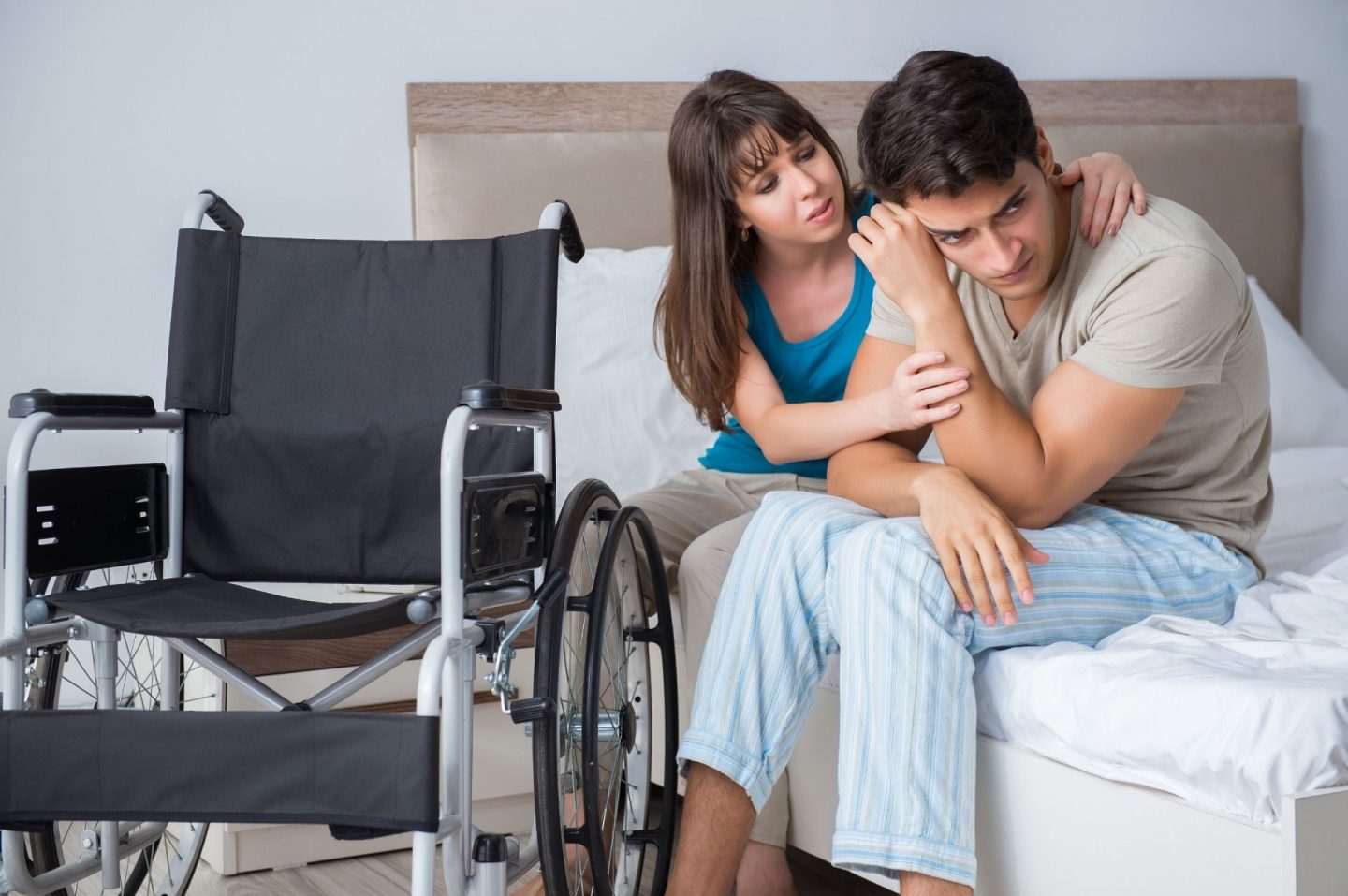
Don’t underestimate the impact of illness, disability and/or pain on mental health. It can affect us in a host of ways we may never have anticipated and it may be that we don’t even realise the extent of it. Those with chronic conditions often put on a brave face for their families to see and show the world someone who can do it all, who is upbeat, who keeps going. They’re good at pretending to be okay because they don’t want to be a burden or be judged. They’re often more concerned with caring about others and meeting the needs of everyone but themselves.
If you get into a pattern of hiding your struggles, concealing how you really feel and putting your needs last, it’s unlikely to end well. I’m sure I’m not the only one to have had a bit of a breakdown (or several), and it can get very messy.
Nobody wants to be unwell, to be restricted in some way by disability or to spend their lives in agony. It’s not fair and all you can do is deal with the hand you’re dealt, but that doesn’t mean you have to be okay with it or that you won’t find it difficult.
Added to this is guilt, resentment, anger, frustration, hopelessness, regret, fear. On top of that are physical changes that affect our biochemistry, brain chemistry and hormones.
Many of us find ourselves continually having to fight for our health, battling beurocracy and budget cuts to get the help, tests and treatment we need.
Please do try to build in time to look after yourself and your mental health. Your mental wellbeing is just as important as your physical body and yet it’s often so far from a priority that it doesn’t make our to-do list often, if at all. Build in small joys, get some space and quiet, affirm your boundaries, practice stress relief activities, develop connections with others, be mindful, find a creative outlet, speak to someone about your experiences and how you feel.
There are online groups, forums and charity telephone numbers if you want someone to talk to. If you feel you need more professional support, please speak to your doctor. It’s what they’re there for. Don’t struggle alone.
Related Reading : Chronic Illness & Depression – 8 Trigger Points
9. Focus On What You Can Do, Not What You Can’t
I’ve written about this before as I think it’s an important one, and it plays into how we can change our perspective to make a positive impact on how we go about our lives. “Focus on what you can do, not what you can’t”.
With any chronic illness condition, pain or other disability, we might find ourselves limited or restricted to some degree in what we can do, both in terms of big and small things. When those limitations are more numerous or severe, our focus is often on them because of course it’s a huge hindrance and change to how we live.
Sometimes it’s good to remember all the things we can do, even if it’s a case of bringing awareness and gratitude to the things we take for granted or if we have to think outside the box a little to find other ways around the limitations. Maybe there are ways you can take some control back in your life.
It can be incredibly empowering to focus on what we can do rather than what we can’t. Shift your perspective a little and bring it back into focus as required when things start to get fuzzy. It can be a continual process of adjustment empower ourselves and to look at what we can do.

10. Acceptance Can Be An Ongoing Work-In-Progress
Acceptance has been a really difficult one for me as I know it is for so many, and I’m still not there yet. What acceptance really is in the case of chronic illness depends somewhat on your own definition.
I like to see it as being about acknowledging where you’re at and what you live with so that rather than fighting it continually, you make a degree of peace with it. That doesn’t have to mean you’re happy about it, but just to reach a point where it’s not causing you additional harm by fighting yourself over it.
The issue can be complex depending on your condition and how it came about. For instance, was it because of delayed diagnosis? A procedure or treatment that went on to become a scandal like sodium valproate or mesh? Or because of an accident at no fault of your own? If you’re left with illness, pain or disability as a result of, for instance, something you feel should never have happened or that was avoidable, acceptance can feel bitter and you’re more likely to encounter increased resistance.
Accepting that nobody can go back in time to change things isn’t easy. It’s must also be hard for many to accept a condition that was there from birth or came about because of genetics. It seems there’s some level of pot luck and destiny, whatever you believe in. It’s not a case of “why me?” because whatever health issues you live with are not about you personally. They are just because they are.
Finding a degree of peace and acceptance of what you live with and what that means for your life is a worthwhile challenge to work on, and it’s okay if it’s a continual work-in-progress. You might just find the less fighting against it you do, the more energy and mental space you have for changing your perspective, actively managing your condition and trying to live your life your own way.
11. Consider Lifestyle Changes & Adaptions
In looking at the things we can do, are there things in your life and at home you struggle with? Are there ways you can make day to day things a little easier, make your activities safer, reduce the effort required when you’re low on spoons? I’m not talking the big things, unless those can be changed. I mean the small things – what about more user-friendly kitchen tools, a bed pillow wedge for resting and sleeping, a bedside table touch lamp for ease of use and to help with light sensitivity, rearranging storage so things are easier to access, stocking up on some supplies to reduce the shopping trips required, using hand scanners in supermarkets to reduce the times you’re having to unpack and repack the trolley, adding grab rails or non-slip mats for the bath, getting a shower stool, and so on.
Bigger changes may involve home adaptions, moving property or enlisting the help of a carer or cleaning. With your lifestyle, look at your stress levels, mental health, diet, exercise, medication and supplement routines, overall wellbeing, connections to others. What’s working well and what needs adjusting?
12. Appreciate Small Joys
It’s the small things that can often be the most valuable and I’ve personally found this to be so very true after my health declined. As your world gets smaller, your focus can sharpen and you start to see beauty in the small things that you may not have even noticed before. Take the time to enjoy the simple pleasures, whatever they may be for you. Listening to the birds chirping in the morning, taking photos of flowers, having a nice cuppa tea, snuggling with a blanket and good book, appreciating nature on a short walk around the park, buying yourself a treat, watching the sunrise or sunset, fresh bedding, indulging in your favourite chocolate, getting comfy in your pyjamas while watching TV.
You can train yourself to spot and appreciate the small blessings in the moment more by habitually slowing down, alleviating some stress from your shoulders and some thoughts from your head. You could also pencil in breaks in your day as part of pacing and slot in some simple pleasures, which will both allow you to get some recuperation time and bring you a little joy. Win win.
Related Reading : How The Small Joys Become Big Things With Chronic Illness, Pain & Disability
13. Change Your Perspective
It’s said that we can deal with any situation we find ourselves in by simply changing our perspective. I don’t think it’s quite that simple when living with ongoing ill health or pain, but I certainly believe in the power of perspective. Changing our perspective when dealing with a chronic condition is a must for many of us, and you can regularly adjust it as time goes on to better suit your needs and situation.
To get a different perspective, we sometimes need to take a step back. We can be so overwhelmed and crushed with what we’re dealing with that it wouldn’t be possible to see out from under it let alone find another perspective to take.
Get some space. Imagine what a best friend would say to you or about you. Treat yourself as you would treat someone you love. Think of how you would like to live, the person you want to be. Challenge your concept of worthiness and success, and redefine it in a kinder, more realistic way. We are all worthy, it doesn’t need to be earned and success does not hinge solely on our career or bank balance. If the view you’re taking on your health, social pressures and the situation you find yourself in is not helpful, it may be time to adjust it, shape it and change it so that it is.
14. Find Your Tribe
Chronic illness can be a lonely road to walk and you may feel like nobody gets you, nobody knows how poorly you are, how much pain you’re in or how much you struggle. You may think others are judging you or thinking you don’t do enough, not able to understand that you’re limited because of your physical health. You may not always be able to change the views of others, but you can work at changing your response and your fear of judgement. You can also strengthen your resolve and nestle yourself firmly in a supportive tribe. For me, I’ve found my place in a tribe of people with chronic conditions, those who’ve had similar surgeries to me, and also other bloggers.
My tribe is online, and you’ll find connections through things like Facebook groups, forums and blogs. You could also try offline meet ups and local support groups, or at least dip your toe in the water by seeing what’s there. There are different communities so find what you feel comfortable with. That’ll be a second home for you, that’ll be where people “get” you and should support you without judgement or pressure. It’s not always perfect because you can get the odd meanie infiltrating even the nicest of Facebook groups, but on the whole, I’ve had a welcoming, helpful and inclusive experience, so I hope you do too if you’re looking for your tribe.
You know what you experience in a way that nobody else does. You know your body, what’s real, what has a physical basis rather than psychological, what it’s like to live in your body each day.
15. Be Kind To Yourself
To better manage chronic illness and to live a brighter life, it’s important to be kind to yourself and to prioritise self-care, no matter how cheesy it may sound. Cut yourself some slack and be mindful of how you’re treating and speaking to yourself. We can be our own worst enemy and harshest critic, when what we need the most is to be our own best friend and cheerleader.
Allow yourself the freedom to do what you want, to ditch the guilt, the take the time you need to rest, to say “no” to what someone else wants you to do when you’re not well enough, to treat yourself when you want to, and to be okay with who you are.
Related Reading : 5 Alternative Thoughts On Self-Care
16. Telling Others About Your Diagnosis
To tell or not to tell, that is the question. I’ve written before about disclosing our chronic illness to others because it’s not always a straightforward matter. In the end, it’s your call. You decide who to tell and how much to tell them. Don’t feel pressured or guilted into it. Sharing may just bring you and the other person closer together and so that you have the support of someone else on your side, but only you can make that decision.
Related Reading : Who Should You Tell About Your Chronic Illness?
17. Your Condition Isn’t Who You Are
As cliche as it sounds, you are not your illness, your pain or your disability, and it doesn’t matter if you were born with it or however you developed it. Doesn’t matter the extent to which it affects your life. It’s not all you are and it’s not who you are inside. Give yourself some credit because your value and your personality far transcend whatever conditions you may have.
How would you describe your personality, or how would a friend describe you? What are your interests and hobbies? Are you a sibling, friend, carer, parent, partner? What things do you like and what brings you joy? What’s your style? Are you funny, hardworking, reliable, empathetic, resilient, cuttingly sarcastic or intelligent? What are your favourite memories? Do you have any skills or hobbies? What do you believe in and what are you passionate about? These all make up who you are. You are still there, no matter what health conditions you deal with. If that person has faded, it’s not too late to find them again and make them shine. Too cheesy?
18. Your Condition May Be Invisible, But You Are Not
Invisible conditions add another layer of potential challenges by the very way in which they present, namely that they often don’t present to others at all, at least not obviously. When others can’t see our condition(s), we can feel judged, disbelieved or not taken seriously by anyone and everyone, from medical professionals and employers, to family and friends. This ties in with guilt some of us experience with a chronic illness and instances of medical gaslighting, too.
You can only do what you can to explain or educate if you wish to do so. Unfortunately you can’t always change ignorance in others. You know how you feel and what you deal with, and that, at the end of the day, is all that matters because it is you who is living your experience.
You may find yourself dimming over time with a condition that nobody can see and by being restricted in what you can do because of your physical health. But, as per the above point on how you are not your condition, it’s important to realise that you are still you. You are a person worthy of life, love, respect, equality. You are who you always were underneath, even though parts of you will likely and inevitably change as a result of what you live with.
There’s so much more to you and to your life than your health, even though it might not always feel like it. You can claw a little of this back when you feel ready to.
It’s also important to remember that you have a voice. Your thoughts, needs and opinions are valid and should be heard, so speak up. Maybe it’s about how others treat you, when dealing with a doctor or specialist, when trying to fight for diagnostics and treatments, when standing up for a cause you believe in.
Try to embrace who you are, what you live with, what your situation is. No apologies, no excuses, no guilt. It’s your life to live, so live it how you want to. You can affect change in your life and you can make a difference in the world, whatever health issues you may live with.
Dig deep, ditch the self-doubt and stand your ground – You are not invisible, and your value as a person and what you have to contribute has never been more relevant. Make yourself heard and persevere because your unique voice is priceless.

What tips would you give someone who lives with chronic illness, pain or other disability? What have you found helpful?
Caz ♥
Facebook || Twitter || Instagram


43 comments
I’m working hard to get back to happy place. I’ve been so sick of being sick and not sleeping, it’s making me depressed. I pray you are doing well. How is your mother? Hugs.
I’m sorry you’re having such a tough time of it, and not sleeping never helps. It’s a vicious cycle. Is there any chance of getting something prescribed to help you sleep? My mum’s been struggling quite a bit too, but we’re trying to keep our spirits up. Thinking of you my friend and sending hugs right back at’cha 🙏 xxxx
I’ve tried once sleeping med that didn’t work and now trying a new one. I have cut out screen time after 5pm and go to bed before bedtime to relax and clear my mind. It’s clearing my mind and waking up and not being able to go back to sleep. Menopause doesn’t help. Has you mon being going through chemo or radiation? That is terrible on the body and mind. Is she dying? That’s a had question to ask, just trying to understand what your dealing with. Any help from your dad? Not sleeping is a cycle that is hard to break. I didn’t have trouble before last year, my pain has increased since then. I sending all the love and remember to take care of yourself. I know that is hard for you but you have to do it for yourself. Not taking care of yourself can lead to more horrible errors visits. Hugs.
All great advice. There are so many that deals with chronic illness and/or pain.
Have a blessed day and week, my friend. Hugs. ♥
Thanks very much, Sandee. I hope the week ahead treats you well! 🌻 xx
Hi Caz. I have done a blog share of this helpful post so further people can read your blog post. 😊
That’s so kind of you, Liz – thank you! 🙏 xx
Very thoughtful and good advice. Thank you.
I’m glad you liked the post, thanks for the comment! 🌷
Caz, It must be much harder to become disabled when you are young, but the advice you share is applicable to seniors as well. At 77, I deal with chronic conditions and declining physical health and mental acuity. Thanks for this helpful advice. hope you and your mom are doing well.
I’m glad you said this because I’ve been thinking about it a lot lately because of my mum. At lot of the stereotypes around ageing show disability and mental decline, but it’s almost a laughable thing. It’s expected, it’s normal. I don’t think there will be many people who feel happy and okay that they’re in a bad way just because they’re older. It’s so woefully understood and under-appreciated socially, and I think within the medical profession. I can only imagine how hard it is, all the more so when losing independence and feeling alone. I think you do great with your writing and blogging, but I’m sorry you’re living with your own such challenges. Sending best wishes your way 💜 xxxxx
As someone who does not suffer from a chronic illness, I have the utmost sympathy for those who have no relief from a condition that lives with you every day…your tips were insightful
And long may that last, John! Thanks for the comment ☺️
Great advice, Caz. I especially like the ‘Find your tribe’ tip. We all need support, and who better than those who can truly appreciate your lifestyle. This is a great tip for everyone in all walks of life. Good to see you!
xoxoxo
Aw thank you for such a lovely comment, Carolyn. I hope you’re keeping well and that the week ahead treats you kindly my friend 💜 xx
The 18 tips you’ve outlined in hopes of helping others with chronic illnesses thrive rather than just exist are incredibly insightful. Thank you, Caz! I hope that you’re feeling better. 🙂
It’s hard to really think about thriving when it’s hard just to get through the day, so I’m amazed by those who push for more for themselves, I think it’s enviable and pretty inspiring. Thanks for your lovely comment! I hope you have a good week ahead 🌺
“There’s so much more to you and to your life than your health.”
Dearest Caz, so MUCH of this advice is solid for life in general, not just for the invisibly pained.
Thanx for your always thoughtful and wise directions.
❤️🙏🤠
Thank you for your kind comment, and I’m glad you felt the post was relevant to all. I hope you guys are keeping as well as possible and that the week ahead treats you kindly 🌻 x
“Not everyone will get it” is absolutely true. I stopped trying to explain my symptoms and how bad they made me feel as only the people with the same problems understand how hard it is. They just cannot comprehend it, no matter how nice a person they are. Living with longterm illness is much different than short-term.
I’m sorry you know what that’s like. And I agree, long term conditions are a hell of their own kind. It’s definitely different, mentally and physically. It’s hard to explain how the ramifications affect your whole life and how bad it really is. I feel like nobody would believe me if I say how bad it really is. They see someone who looks pretty much okay, they can’t see behind that. Please know you’re not alone in your experience. I feel you, and I’m sorry for the challenges you face all the time, too. 💜 xx
You explained the dilemma exactly. Sorry that you’re suffering too.
Hi Caz, such an excellent post for anyone living with a chronic illness.
Having lived with pain for most of my life, I agree that acceptance is an ongoing issue. It’s not something that happens once, then everything is good. And the guilt you talk about, it’s so hard not to guilt-trip ourselves, isn’t it? But please, try to stop doing that to yourself. I always say that self-guilt is like such a heavy weight to carry about, and when you’re living with health problems, you carry enough of that already. So perhaps try to lighten your load.
This is such a good post, and I hope you’re able to to take some of your own advice, especially, be kind to yourself.
Love,
Liz
I’m sorry you know what I mean with guilt, it’s a really tough one. I don’t know how to let go of it or move forward from it, it’s like it just won’t budge. I’m a wee bit of a hypocrite with some things like this. I can give advice but can’t take it and act on it myself. I imagine “Doctor heal thyself” applies to a lot of us. Thanks for such a lovely comment, Liz. I hope you have a good week ahead & give Kip a cuddle for me 🌸🌼🌻 xx
So wise and comprehensive, Caz. Some of these pointers are nearly universally applicable. Best wishes to you as you do the difficult work of trying to adopt them in your own life. Ain’t easy—that I know!
xxxooo Annie
Thank you for your lovely comment, Annie. I’m glad you found the tips widely applicable to all, beyond those with chronic conditions. I’m sorry you know what it’s like trying to manage health problems though. It certainly isn’t for the faint of heart! 💙 xx
Lulu: “This is all excellent advice! Our Dada is in several groups for people with brain aneurysms and they’re all generally very supportive of each other!”
I’m glad your dada has found some good fellow hoomans who know what he’s going through. Thank goodness we have opposable thumbs and can access the Internet! xx
Good reminders — thorough and comprehensive. I don’t chronic disease issues, but my wife does. These will help me help her as she endures and presses on. Thanks for posting. The best to you, always.
I’m glad you liked the post and thank you so much for your comment. I’m sorry for what your wife lives with and I’m sure it’s not easy on you either. I think sometimes it’s harder to deal with a loved one struggling than yourself struggling. Sending my best wishes to you both 🙏 xx
Funny about the “comparing yourself to others” thing ― the aneurysm group I’m in is currently in the middle of a VERY long discussion kicked off by somebody saying how much worse she has it than everyone else and how the people with unruptured aneurysms should basically stop talking. (She started out by saying what an empathetic person she is, then proceeded to undercut that with the rest of her comments.) Anyway this generated a lot of pushback from people pointing out that “it’s not a competition”, so that was good to see.
Oh dear, that’s not cool. She sounds like one of those “I’m not an asshole but…” kind of people. I’ve seen it before and I don’t care for it at all either so I’m sorry that’s happening in your group. Maybe with some of the replies she’ll start to see the error of her ways. Or maybe that’s wishful thinking. xx
For those of us fortunate with our health it is a good insight into life with chronic conditions. Healthy people make throw away remarks such as ‘I’m so exhausted’ with no idea what true fatigue is.
I’m sure I made plenty of such throwaway remarks too before I got sick. It’s easy to do and I think very normal, because it’s easy to not see the world of health problems when you’re not in it. Stay well and for the comment, Janet.🙏 xx
As always, another great post, Caz! Acceptance as a process particularly resonates with me. I have been sick for decades, and most days I have learned to accept it. But I still have setbacks where it is difficult to accept, where I wish I had better genetics. Thank you for the reminder that it’s okay to feel that way.
I’m sorry you’ve struggled with acceptance, too. I don’t know how you can really get past some roadblocks, like the reason for having a condition for instance, like you say with your genetics. If that reason really really sucks, how can you accept it? I think sometimes maybe it’s more about not fighting mentally it so much, not having it take up so much of your heart and soul all the time. Having setbacks makes sense because it does suck and you’re a fighter, so you’re not going to be okay and happy about it. I’m sorry for how you’ve spent so long living with illness but for what it’s worth, I’ve always loved your attitude and spirit in your writing. I don’t know if you’ll be blogging more or not, but I hope you’re finding time to look after yourself and please know you’re not alone. Sending love xxxx
A brilliant post, Caz. I think much of this applies equally to those who aren’t (currently) living with chronic illness, pain and/or disability. We could all do with being kinder to ourselves, in a world which can feel increasingly confusing and challenging to navigate. A couple of months ago, I read a book called ‘Feel Good Productivity’, and it has made me re-think my life/work balance (which was definitely skewed unhealthily towards work). Sometimes, instead of writing a ‘to do’ list I make a list at the end of the day of (e.g.) five things that I have done.
I’m really glad you found this post more widely applicable. I absolutely agree on how most of us could do with being kinder to ourselves and rethinking our approach in life. It’s getting more and more pressured towards constant productivity, and our sense of self worth is tied into how much we do, what we do for work, how much we earn and how much we’re running ourselves into the ground. I don’t think I’ve heard of that book so I’m going to take a look for it now, thanks! I think that’s a great idea to focus more on the things you’ve done so you can feel good about that. It’s far better than viewing what you’ve not done so you can beat yourself up about it. A change in perspective can be a powerful thing! Thank you for such a thoughtful comment, Rosie. 💜xx
Great piece, Caz, and written in a very friend-to-friend manner 🙂 I find myself nodding along to all the tips and also struggles that you’ve listed — especially the one on not being a believer in productivity culture, yet guilty as charged in still engaging in it. Like you, I find that I am never ‘doing enough’ even though I’m fatigued to the bone. People often say to me they don’t know how I’m handling school, health, and work simultaneously, then I go on and feel guilty because I may be spending half a day just lying in bed recovering, really, and feel a sense of imposter syndrome lol. I think you know I mean. Once again, great piece, and a must-read especially for anyone who’s newly diagnosed.
Thank you for such a lovely comment. I’m just sorry you know what I mean with productivity and feeling you’re never doing enough. I find that when you lose so much time being unable to function at all or only slowly, you then have to cram in more and go faster and push harder to try to catch up. It’s a never-ending cycle and it feels so stupid and meaningless, but you can’t stop. That of course makes you more stressed and physically worse, and I end up sometimes feeling resentful which I hate feeling, but even more I feel crappy about myself for not being able to do enough. It’s hard getting the basics done, let alone anything beyond that. So in that regard, without trying to make you feel worse, I do think you’re doing amazingly! But it’s coming at a high cost to you, and of course it’s not sustainable in the long run without even greater cost.
It’s much easier to give advice on this aspect of living with health conditions I think than it is to take it. Very much a case of “Doctor, health thyself”. I wish there was something that could help in your situation, but I bet you’d be so kind to a friend going through the same, and yet you just can’t apply it to yourself. Do you think it’s an element of not feeling worthy? Like we deserve to beat ourselves up, especially because we’re not really doing great as others think we are. I hope you can start to show yourself a little more compassion because you show so much to others. xx
Good to know. Thank you.
Thanks for reading ☺️
People can listen, learn and empathize, but there’s a difference between understanding something intellectually and actually living inside it every day. And the “but you look nice” or “you’ll get better” can be so frustrating.